Cancer is rare in teens. Certain diseases like breast cancer usually affect adult women - teen girls are unlikely to get this form of cancer. But there are some types that are more likely to occur in teens. Testicular cancer, for example, tends to affect younger guys rather than older men.
The types of cancers teens get have one thing in common: cells, the basic components or "building blocks" of the human body. Cancer occurs when cells develop abnormally and grow in an uncontrolled way. Read on to learn more about some types of cancer that teens may get, including warning signs and symptoms and how these cancers can be treated.
Osteosarcoma
Osteosarcoma (pronounced: os-tee-oh-sar-koh-muh) is the most common type of bone cancer. In teens, it can sometimes appear during their growth spurts. Osteosarcoma affects twice as many guys as girls and tends to show up in people who are taller than average. In most cases, there is no known cause for osteosarcoma.
The most common symptoms of osteosarcoma are pain and swelling in an arm or leg that is sometimes accompanied by a lump. Some people have more pain at night or when they exercise. Osteosarcoma is most often found in the bones around the knee but can occur in other bones as well. In some cases, a tumor can spread or metastasize to the lungs and other bones. (Metastasize is the word doctors use when cells from a tumor break away from the original cancer site and travel to a different tissue or organ.)
Treatment for osteosarcoma usually involves chemotherapy (medication that kills cancer cells) as well as surgery to remove the tumor. A doctor may perform limb-salvage surgery, where the bone that has cancer is removed and the limb (usually an arm or leg) is saved from amputation by filling the gap with a bone graft or special metal rod. In rare cases, a doctor may need to amputate (remove) part or all of the limb to fight the cancer.
Losing a limb can be devastating, especially for teens who are already dealing with body changes. Counseling and physical therapy (also called physical rehabilitation) can both be helpful in this situation. People who have amputations are usually fitted with a prosthesis (pronounced: prahs-thee-sus), or artificial limb. Most teens with a prosthesis are able to return to normal activities - even sports.
Most people develop side effects, such as hair loss, bleeding, infections, and heart or skin problems, from medicines used in chemotherapy treatment for osteosarcoma. Chemotherapy may also increase the person's risk of developing other cancers in the future. The good news is that most teens with osteosarcoma do recover.
Ewing's Sarcoma
Another type of cancer that affects the bone is Ewing's sarcoma. It is similar to osteosarcoma in that it also affects teens and young adults and is usually located in the leg or pelvis.
Most teens with Ewing's sarcoma receive chemotherapy as well as surgery. Some patients will also need radiation in addition to or instead of surgery to make sure that remaining cancer cells have been destroyed. Ewing's sarcoma generally responds well to chemotherapy and radiation.
Osteosarcoma and Ewing's sarcoma share common risk factors and side effects from treatment. Chances for recovery depend upon where the tumor is located, its size, and whether it has spread. But both types of bone cancer respond well to treatment and are curable in many cases.
Leukemia
Leukemia is one of the most common childhood cancers. It occurs when large numbers of abnormal white blood cells called leukemic blasts fill the bone marrow and sometimes enter the bloodstream.
Because these abnormal blood cells are defective, they don't help protect the body against infection the way normal white blood cells do. And because they grow uncontrollably, they take over the bone marrow and interfere with the body's production of other important types of cells in the bloodstream, like red blood cells (which carry oxygen) and platelets (which help blood to clot).
Leukemia causes problems like bleeding, anemia (low numbers of red blood cells), bone pain, and infections. It can also spread to other places like the lymph nodes, liver, spleen, brain, and the testicles in males.
The types of leukemia most likely to occur in teens are acute lymphocytic (pronounced: lim-fuh-sih-tik) leukemia (ALL) and acute myelogenous (pronounced: my-uh-ladj-uh-nus) leukemia (AML).
Virtually all people with ALL and AML are treated with chemotherapy, and some also receive stem cell transplants, in which they are given new stem cells from another person. Bone marrow transplants are a common form of stem cell transplantation. Some people also receive radiation. The length of treatment and types of medicine given will vary depending on the type of leukemia.
The chances for a cure are very good with certain kinds of leukemia. With treatment, most patients with ALL and many patients with AML are free of the disease without recurrence.
Brain Tumors
Brain tumors are not common in teens.
Two of the most common forms are astrocytomas (pronounced: as-truh-sye-toe-muhz) and ependymomas (pronounced: ep-en-duh-moe-muhz). Astrocytomas are tumors of the brain that originate from cells in the brain called astrocytes. This type of tumor doesn't usually spread outside the brain and spinal cord and doesn't usually affect other organs. Ependymomas are tumors that usually begin in the lining of brain ventricles. The brain has four ventricles, or cavities, that are a pathway for cerebrospinal fluid, a liquid substance that cushions the brain and spine and protects them from trauma.
No one knows the exact cause of primary brain cancer. One possibility is that as the brain and spinal cord were forming, a problem with the cells occurred.
Treatments vary depending upon the type and location of the tumor. If it is possible to remove a tumor, surgery is usually performed, followed by radiation. Some patients receive chemotherapy as well.
The chance of surviving a brain tumor depends on its type, location, and treatment. But there is a very good chance that if the tumor can be removed and additional treatment is given, the cancer can be cured.
Lymphoma
Lymphoma refers to cancer that develops in the lymphatic system, which includes the lymph nodes, thymus, spleen, adenoids, tonsils, and bone marrow. The lymph system functions in the body by fighting off germs that cause infection and illness. Most teens with lymphoma have either Hodgkin's disease or non-Hodgkin's lymphoma.
Hodgkin's disease usually occurs in adolescents and young adults. It can show up in lymph nodes in the neck, armpits, chest, or other places. The lymph nodes become enlarged but are usually not painful. Hodgkin's disease is identified by large, unusual cells called Reed-Sternberg cells that are detected under a microscope after a biopsy, a procedure in which a doctor removes a small tissue sample to examine it for cancer cells. Chemotherapy and often radiation are used to treat Hodgkin's disease.
Non-Hodgkin's lymphoma (NHL) is similar to leukemia (ALL) because both involve malignant lymphocytes (pronounced: lim-fuh-sytes), white blood cells found in lymph nodes, and because many of the symptoms of these diseases are the same. NHL is usually treated with chemotherapy.
Teens with Hodgkin's disease or NHL who have completed their treatment have an excellent chance for cure.
Other Cancers
Other cancers that teens may get - although they are generally rare - include testicular cancer and rhabdomyosarcomas.
Although testicular cancer is actually rare in teen guys, overall it is the most common cancer in males ages 15 to 35. Testicular cancer is almost always curable if it is caught and treated early. Guys should learn how to examine their testicles regularly to detect any abnormal lumps or bumps, which are usually the earliest sign of testicular cancer.
Rhabdomyosarcomas (pronounced: rab-doe-my-uh-sar-koe-muhz), or soft tissue sarcomas, are less common cancers that mostly occur in infants, kids, and teens. With these cancers, cancer cells grow in the soft tissues of the skeletal muscles (the body's muscles that a person controls for movement). Though these cancers can occur anywhere in the body, rhabdomyosarcomas most frequently happen within the muscles in the trunk, arms, or legs. The types of treatment used and chances for recovery depend upon where the rhabdomyosarcoma is located and whether the cancer has spread to other areas of the body.
Original Article At: http://kidshealth.org/teen/diseases_conditions/cancer/types_of_cancer.html
Saturday, November 14, 2009

Saturday, October 17, 2009
Inspiration
"It's not life that matters, It's the courage that we bring to it"
A Quote from my bag of tea :)
A Quote from my bag of tea :)
2010 Relay for Life
Getting a Head start getting together my team for Relay for Life next spring and found out it's on my Birthday this year! At first I couldn't decide if that was a good thing or bad thing but why would it be bad! Looking forward to wearing my purple shirt and little white sash that says "survivor." :)
Monday, October 5, 2009
Why Koi?
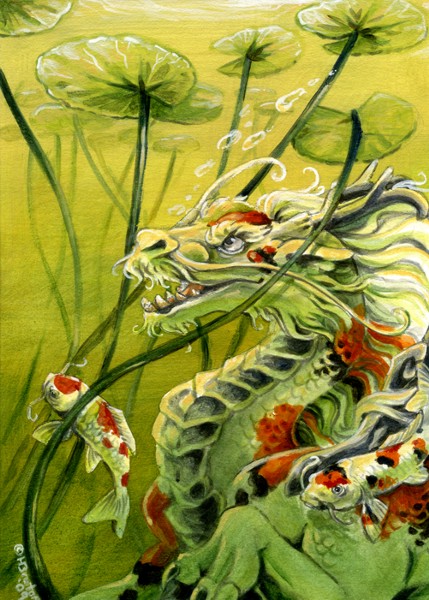
image found using Google Search from Hbruton's Deviant Art Page
"The koi fish in Japanese folklore represents the overcoming of obstacles, because the koi fish travels up the yellow river and when it comes to the end of the river it transforms into the dragon; thus overcoming the adversity represented by the strong river to fufill its own destiny.
The Koi is the symbol of strength and will, the will to go against odds to reach the destiny. And the Dragon is the power and ferocity." (wikianswers)
We all overcome obstacles on a daily basis, whether we're living with caner, survivors, family, friends, or lovers of people affected by this disease. That's why I chose Koi as the title to this blog, we all become something bigger than ourselves by having the strength to face everyday with cancer.
First Post
Hello and Welcome All,
My name is Terrah and I am a cancer survivor. I have been in remission for two years. I was 19 years old and a sophomore in college when I was diagnosed with Sarcoma. This blog is meant to be a way for me to reach out to others who are young and facing the same adversities. To be young and diagnosed with a fatal disease can be pretty traumatic to all aspects of your life and can leave deep emotional and mental scars. So I'm going to write about my life as a now 20 something post cancer college student.
I'll first be posting the specifics of my diagnoses and treatment processes along with some lovely* pictures I took along the way.
*lovely can be loosely translated to gruesome
I want to use this blog as a way to discuss things that I've faced since my diagnoses on a more day to day basis, like how to first tell a date/fried/significant other what you've been through, How to respond when someone asks about your large and visible scars, and also to chronicle those emotional breakdowns we all inevitably suffer.
I'm by no means trying to tell people the right way to deal with their issues through my writing, it will hopefully help me deal with mine and I strongly encourage people to posts comments and opinions to stimulate discussion.
So for now I can say that I'm starting this blog for selfish reasons, to help myself cope and get certain things off my chest. But in the long run if i even bring a few people together to feel less alone I will be extremely elated.
That's all for now,
Terrah
My name is Terrah and I am a cancer survivor. I have been in remission for two years. I was 19 years old and a sophomore in college when I was diagnosed with Sarcoma. This blog is meant to be a way for me to reach out to others who are young and facing the same adversities. To be young and diagnosed with a fatal disease can be pretty traumatic to all aspects of your life and can leave deep emotional and mental scars. So I'm going to write about my life as a now 20 something post cancer college student.
I'll first be posting the specifics of my diagnoses and treatment processes along with some lovely* pictures I took along the way.
*lovely can be loosely translated to gruesome
I want to use this blog as a way to discuss things that I've faced since my diagnoses on a more day to day basis, like how to first tell a date/fried/significant other what you've been through, How to respond when someone asks about your large and visible scars, and also to chronicle those emotional breakdowns we all inevitably suffer.
I'm by no means trying to tell people the right way to deal with their issues through my writing, it will hopefully help me deal with mine and I strongly encourage people to posts comments and opinions to stimulate discussion.
So for now I can say that I'm starting this blog for selfish reasons, to help myself cope and get certain things off my chest. But in the long run if i even bring a few people together to feel less alone I will be extremely elated.
That's all for now,
Terrah
Subscribe to:
Posts (Atom)